eOrganic author:
Paulina Jenney, University of Wisconsin Madison
Introduction
Ask Americans to imagine wheat country, and they might picture Kansas, or North Dakota, or maybe Montana, where the air is dry and the flatland seems to stretch on forever. It is true that today’s wheat is at home in those places, but it wasn’t always this way.
Two hundred years ago, the Northeast and Midwest were mostly self-sufficient in bread wheat production. For a time, Wisconsin alone produced more wheat than any other state in the country. Then in the latter half of the 19th century, disease pressure and soil exhaustion became an increasing challenge for wheat farmers. Railroads facilitated transportation to the Great Plains, where conditions were drier and more forgiving, and wheat—along with its farmers, breeding programs, and mills—followed the trains and stayed there.
But drive through the Upper Midwest this fall, and you might get lucky enough to see sprouts of a new hard red winter wheat variety, the first of its kind to be bred specifically for organic production in the region. Re-introducing small grains like wheat helps improve soil health and break pest and disease cycles common to less diverse crop rotations. And this variety, called Bickford, is notable because not only has it been tailored to specific environmental conditions, but also to a unique baking ecosystem: stone-milled flour for artisan sourdough bread.
And behind Bickford is an even bigger story, one that challenges the modern plant breeding formula, where scientists rarely involve the people who depend on the result in the decision-making. Instead, Bickford is the result of a collaborative breeding project spanning three universities, multiple states, and a network of plant breeders, organic farmers, stone millers, and artisan bakers, some of whom have been talking, trialing, baking, and breaking bread together for more than 15 years.
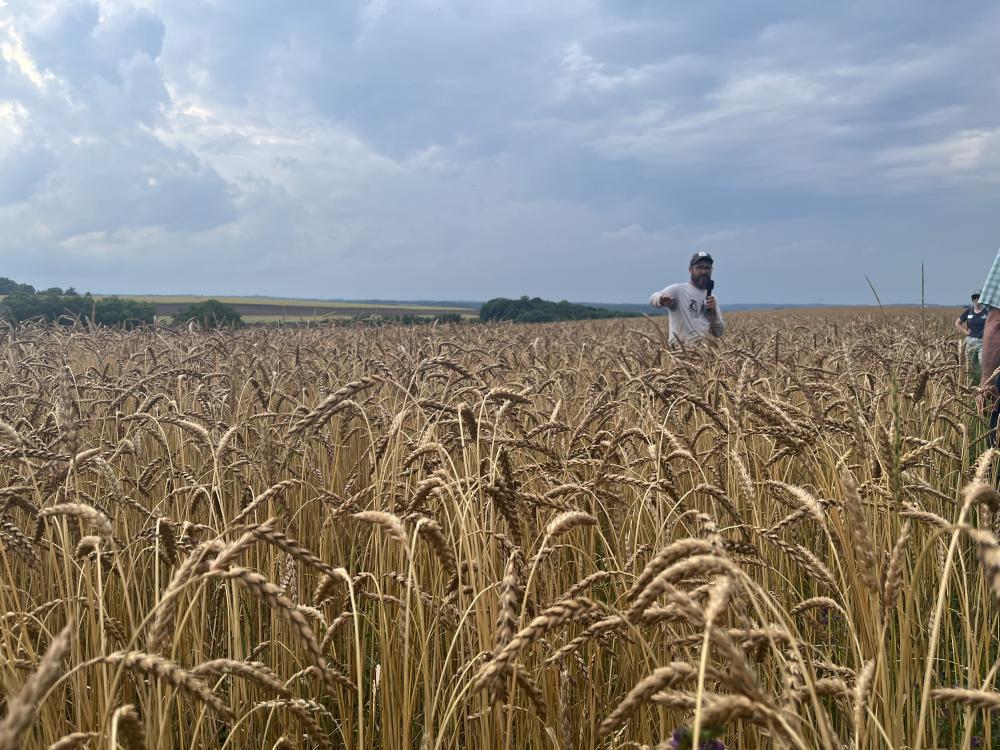
Figure 1: Bickford wheat at field day at Meadowlark Organics. Photo credit: S. Elliott, Artisan Grain Collaborative.
Warthog: An Early Winner
In 2010, June Russell was managing the Regional Grains Project at GrowNYC’s Greenmarkets program in New York, a network of farmers markets whose goal is to support regional agriculture by ensuring that vendors at the market sell only local products. In those years, a handful of researchers had been working on identifying regionally-adapted wheats for the Northeast, including Elizabeth Dyck at the Organic Growers’ Research and Information-Sharing Network, Heather Darby at the University of Vermont, and Ellie Rogosa at the Heritage Grain Conservancy. “We were looking for any kind of local wheat,” Russell explained. “Was there even such a thing?”
To help answer that question, GrowNYC teamed up with the Northeast Organic Farming Association of New York and the Northeast Organic Wheat project to organize a public wheat tasting at the French Culinary Institute. Flour from ten wheat varieties (seven heritage and three modern varieties) was ground and sent to four professional bakers around the city, who were given identical recipes for a loaf of bread that was then scored by bakers, food writers, and restaurateurs. Another three bakers made pastry and pasta.
“The hands-down favorite in terms of flavor—how the bread baked, the crumb, the crust—was Warthog wheat,” said farmer Thor Oechsner, who at the time had recently co-founded a certified organic, regional flour mill called Farmer Ground Flour outside of Ithaca. “That was when I decided I’m going to get a whole bunch of Warthog wheat and see if this stuff grows in New York.”
Oechsner had also already been thinking about the importance of regional adaptation for growing grains in the Northeast. “If it’s not regionally adapted, your chances of coming up with a crop that you can use as a food-grade product goes down. You know, we have a lot of humidity and lots of rainfall. Those conditions put a lot of disease pressure on the wheat,” he said, citing the reason so many farmers had stopped growing wheat there in the first place. But Warthog, a hard red winter wheat from Canada, proved itself capable in those conditions. “Warthog is this incredibly stable variety. There’s only been one year in the whole time I’ve been growing it that we haven’t had a marketable crop.”
While farmers immediately appreciated Warthog’s agronomic qualities, Russell was careful to note the limits of what that early tasting could tell them about its utility for baking. “People didn’t have any vocabulary for this yet, none of us had the sensory experience [to evaluate varieties of flour],” she explained. Still, the impression Warthog made “was enough to generate the interest, the enthusiasm, and the demand.” With some momentum building, and farmers willing to grow the wheat, GrowNYC instituted a requirement that bakers selling at their market had to use at least 15% regionally grown grain. The requirement was intended to bring bakers into the market’s mission of supporting regional agriculture. By requiring bakers to use local flour, they created a group of buyers farmers could rely on, giving them the confidence to plant the wheat in the first place.
It worked. Henry Blair, a baker himself before joining GrowNYC’s Regional Grains Project as Sales Associate, recalled: “We had Warthog berries out on the table at the market, and something about that just captured people’s interest as they were walking by. They’d see that little label, Warthog berry. What is that? It was this opening to tell more of the story about what was going on with regional grain systems. I think through that, we got some good anchor customers.” One restaurant, he recalled, latched on to Warthog in particular. “They wound up placing a standing order of 100 pounds of it a week.”
For large commercial bakeries, the requirement, and the demand it created, became an urgent matter. Sharon Burns-Leader, owner of New York’s Bread Alone Bakery, explained: “We are an organic bakery, and always have been, and it’s always been important for us to use grain from as close as we could.” At the time, their miller was in Montreal—relatively close by, but the Greenmarket region didn’t cross international borders to include southern Quebec. So they turned to Oechsner’s Farmer Ground Flour, which had the capacity to produce flour at the scale they needed. There was just one problem: scaling a grain from a few test plots to enough to supply a commercial market takes years. “There was not enough grain,” Burns-Leader explained. “Okay, let’s get the grain. When can we get it? Tomorrow? No, not for five years.”
In addition, while Warthog was a strong performer, it wasn’t a complete solution. As a winter wheat, its protein content hovered around 10%, which is lower than what most bakers need for a reliable bread flour. To solve this, millers blended it with a higher protein variety. Glenn, a stable hard spring wheat from North Dakota, gained initial popularity with Northeast organic farmers and became a natural addition to these flour blends. But communities coalescing around regional grain, recognizing the risk of relying too much on one variety and wanting to conduct more research on wheats suited for organic farming, started looking at what else was out there.
Over the next several years, a series of grain variety trials were launched through the Value-Added Grains project, a multi-institution research initiative coordinated by plant breeder Mark Sorrells and Research Specialist David Benscher at Cornell University and funded by USDA’s Organic Research and Extension Initiative. This allowed the Northeast network to expand variety testing across the region. Collaborating with eight artisan bakers, the team evaluated 146 commercially available wheat varieties for baking sourdough bread, matzah crackers, yeast bread, shortbread, cooked grain, and pasta. The project laid the groundwork for recommending additional varieties to farmers and bakers in the region. It also showed that the environment in which wheat is grown—and the way it’s milled—affect its quality just as much as its genetics.
Brooklyn-based Austin Hall, who runs She Wolf Bakery, was in the early part of his career as the project got underway. He explained that working with local grain involved a bit of a learning curve for everyone. “In the beginning, I would pick up a handful of flour, and I would ask myself, what does a miller do, and how do they know that they've done a good job? If all they have is this pile of flour, how can you tell? At first, I didn't feel like we made very good bread when we worked with these trickier, low-protein flours.”
Over time, a community was built in the Northeast around that iterative feedback loop, with farmers, bakers, and millers working together to improve every stage of production. “Ten years later, all of the bread that we made was uniformly great across all the varieties we were testing,” Hall said. “It just felt like we had really dialed in the grain and the milling and everything.” Out of those tests, Warthog continued to be a favorite wheat for sourdough, confirming what the tasting at the French Culinary Institute had found in the very beginning.
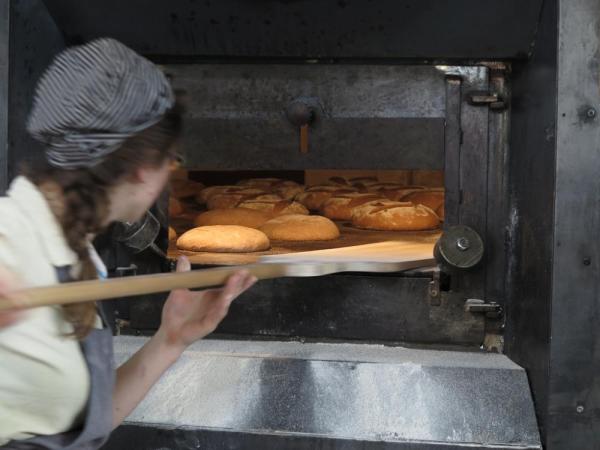
Figure 2. 2014 Baking trial at Wide Awake Bakery, New York. Photo credit: June Russell, Glynwood Center for Regional Food and Farming.
Building a Breeding Program
Warthog’s success established that farmers in humid, disease-pressured environments could grow a food-grade bread wheat that bakers and consumers liked. At the same time, it was becoming clear to the researchers involved that none of the existing varieties had been bred with organic farmers in the Northeast or Midwest in mind.
Julie Dawson, who was involved in the Value-Added Grains project alongside Mark Sorrells, had recently conducted a plant breeding postdoc in France, working with farmers to identify and improve upon heirloom wheat varieties that did well in organic systems. So, with a number of French wheat seeds, and the participatory method she’d learned, she and Sorrells set to work on creating new varieties for organic farmers in the U.S.
The first crossing block of eight parents, selected for bread quality, organic adaptability, and disease resistance, was made in a greenhouse at Cornell in 2012. A second block added eight more parents in 2013. Among them: Gua and Rouge de Bordeaux, French heritage wheats Dawson had identified during her postdoc; Warthog, the Canadian variety that had already proven itself in the Northeast; Red Fife, a popular historic Canadian hard red spring wheat, and Arapahoe, a modern hard red winter wheat with strong winter hardiness.
When Dawson moved to Wisconsin for a faculty position in 2013, Lisa Kissing-Kucek, who came to Cornell as a PhD student, took over much of the early-generation breeding, evaluating hundreds of lines that came out of those initial crosses. At Cornell’s Caldwell Research Farm, they had a nursery specifically designated for exposing seedlings to Fusarium head blight, the fungal pathogen that produces deoxynivalenol, or DON for short, a common challenge for wheat producers in humid, high-rainfall climates that can cause potential health risks. Also called vomitoxin for reasons that are perhaps self-explanatory, the toxic compound makes grain inedible at levels over one part per million, a low threshold. While conventional farmers can spray their fields with fungicide to prevent the blight from taking hold, organic farmers’ best defense is to have varieties that are resistant to the blight in the first place.
In the nursery, lines that couldn’t survive the disease pressure were eliminated. Those that remained were screened for protein content using a non-destructive single-seed analyzer. The process winnowed 300 families down to 50 advanced lines. And while 50 lines may sound like plenty, the researchers involved were quick to point out that they were still a long way from having anything they could trial with bakers.
“In breeding, we start with these really tiny amounts,” Kissing-Kucek explained. “Julie [Dawson] made crosses from one plant to another in the greenhouse to get just a handful of seed. And then I took the handful of seed in a high tunnel and made a little bit bigger handful of seed. Our goal is to get enough that we can bake with, which takes a long, long time.”
Along the way, she interviewed organic wheat farmers in the Northeast to understand what traits they wanted, homing in on the need for stability and artisanal baking quality as main traits of interest. Those traits, along with the need for resistance to DON, were also highly desirable for farmers in the equally disease-pressured Midwest.
Almost as soon as Dawson arrived in Madison, she was approached by Midwestern farmers and bakers who had been following the trials in the Northeast, were already growing Warthog, and were eager to start doing trials of their own. “We’re five years behind,” she remembers them telling her. “How fast can we get going?”
At first, there was not much research that could be done. UW-Madison had discontinued its wheat breeding program more than two decades earlier, and Dawson, who had been hired to work in the horticulture department, lacked access to the specialized equipment that small-plot field trials require, such as the narrow plot planters and small combines that can cleanly harvest a single experimental row. That changed, however, when Lucia Gutierrez, a quantitative geneticist and cereals breeder, arrived as a new faculty member in 2015. Though she joined UW-Madison to take over the established oat breeding program, she found the collaborative enthusiasm of the group persuasive. “I was invited to a call where there were organic farmers, millers, and bakers who were really hoping to get wheat for high baking quality grown in Wisconsin,” Gutierrez remembered. “And at that point we said, okay, maybe we can start with something.”
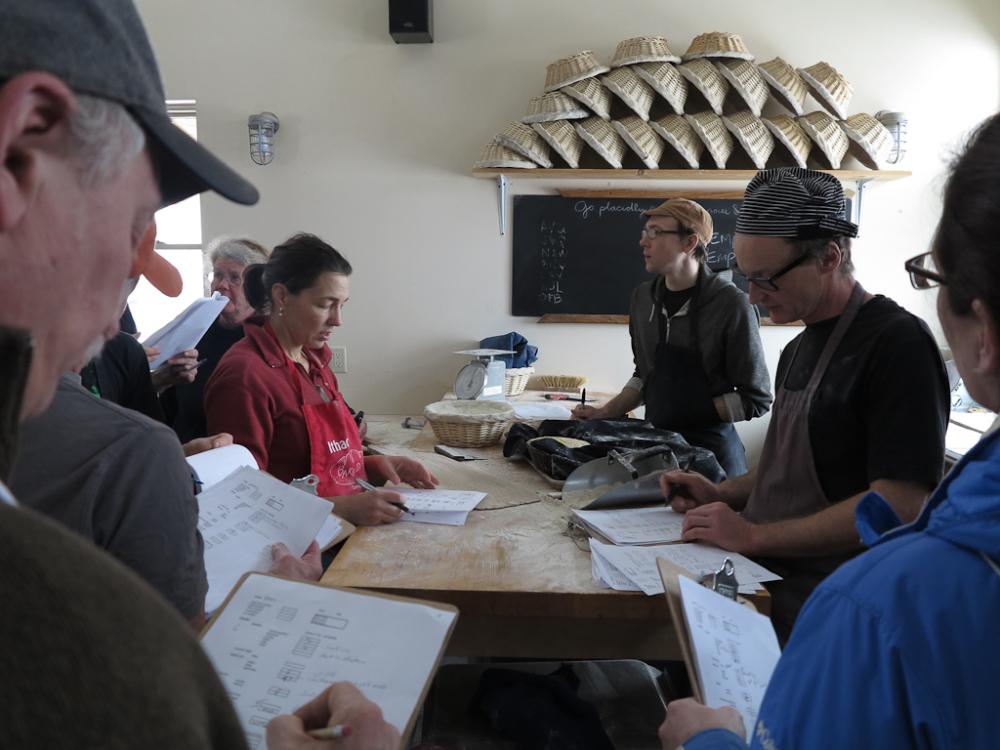
Figure 3. 2014 Baking evaluation at Wide Awake Bakery, New York. Photo credit: June Russell, Glynwood Center for Food and Farming.
Warthog Goes West
Dawson and Gutierrez began trialing wheat in 2016 at the West Madison Agricultural Research Station in Verona, Wisconsin and, a few years later, at an additional site in Spooner, Wisconsin. The trials ran for five years under certified organic conditions, evaluating the 50 advanced lines that had survived the Cornell selection process alongside commercial checks including Warthog and Arapahoe. The plots followed a four-year rotation: three years of alfalfa, then one year of cereals, with clover frost-seeded into the trials each winter to maintain soil cover between seasons.
Four hours south, farmer Harold Wilken was already growing Warthog and was interested in participating in the trials. The founder and owner of Janie’s Farm, a 4000-acre organic farm in Danforth, Illinois, Wilken had recently opened Janie’s Mill, one of the first regional mills specifically oriented toward supplying bakeries rather than individual home bakers, which gave him a particular stake in finding a grain worth milling.
“I was shipping most of my small grain for animal feed and I thought, well, why aren’t we feeding people? If you’re running a mill, you need grain that’s good for flour,” he explained. “We started working with Julie [Dawson], because Julie was looking at not only the genetic makeup of the wheat, including things like disease resistance, but she identified traits that taste good for bakers’ use.”
Driving UW equipment to Illinois wasn’t feasible, so Dawson’s team mailed him the seed, and he worked with University of Illinois researcher Allison Krill-Brown to plant small plot trials on his farm.
Wilken’s eye for the field helped researchers select for traits that are important to farmers. “We want our wheat to have a lot of surface area on the leaves, so it shades the ground and keeps weeds from germinating,” he said. “Things like, are they all heading at the same time? Is there no disease in the heads? A good strong root system; a thicker stem. Little things like that just stand out when you’re walking through the trials.”
John Wepking of Meadowlark Farm & Mill, who joined the on-farm trials in 2019, explained why the agronomic qualities they were looking for in this breeding trial were so different from what was already on the market. “The move in most wheat breeding was to go shorter, shorter, shorter.” Short-statured wheat is easier to harvest mechanically and less prone to falling over under the heavy synthetic nitrogen application common to industrial operations. “But organic farmers tend to like taller wheat because it’s more competitive with weeds, a bit more vigorous. And then in a drought year, the taller varieties do better because they have a more extensive root system.”
Much of the hands-on plant breeding work was conducted by Pablo Sandro Garcia, who joined Gutierrez’s lab as a technician, and later became a PhD student and first author on the paper documenting the project. For years, he drove out to participating farms several times a season to plant, deliver equipment, evaluate, harvest, and record data on all the lines in the trial, while talking with the farmers and getting their perspectives on the wheat varieties in the field. Though, like many people in this project, he is reticent to take credit, the team is adamant that his role was critical to Bickford’s success. “This would not have happened without Pablo,” Dawson said plainly. “He has endless energy, and he has a great eye for what’s doing well and not. He really listened to what the farmers were looking for and incorporated that into what he was looking for in the field.”
For some farmers, incorporating a field trial into their production may seem like a hassle, an extra high-pressure step when there are already so many details to keep track of in making a farm run. But Meadowlark Farm & Mill co-owner Halee Wepking said the research team made it easy. “It’s just a matter of fitting it into our rotation, making sure it’s in the right field. But otherwise it’s been a very fun and rewarding, and not very difficult, task to participate in,” she said.
The result of five years of selection was a set of 16 lines that showed promise for all the traits that farmers had identified that could be tested in the field: yield, competitiveness with weeds, and resistance to DON in humid conditions. One experimental line in particular showed more stability across different years and locations than any other line in the trial, including its parents, the French heritage variety Rouge de Bordeaux, and Warthog, the variety that had become beloved by farmers and bakers in New York.
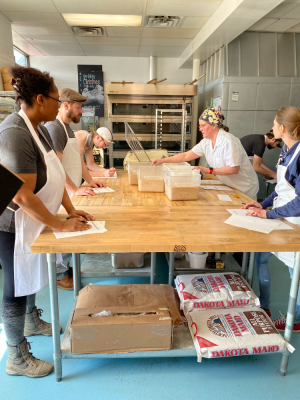
Figure 4. Left: 2023 Baking trial, Minneapolis. Photo credit: Alyssa Hartman, Artisan Grain Collaborative. Right: Bickford baguettes from Madison Sourdough, Wisconsin, 2024. Photo credit: E. Byrne, Artisan Grain Collaborative.
Bringing in the Bakers
Models for participatory plant breeding are not exactly new. Before scientists began to really understand genetics and before plant variety development became a full-time job at universities and private companies around the world, for millennia, farmers iterated on their crops across seasons, saving seeds from varieties that had desirable qualities, such as great flavor, big fruit, and unique colors. In the U.S., as the federal government set up experiment stations in universities and across the country, those publicly-funded plant breeders were charged with responding to farmers’ needs and helping to shepherd varieties adapted to different geographical conditions. Over the last 50 years, as the seed industry has become more privatized, plant breeding has shifted to a more top-down approach, where companies decide what to offer, and farmers mostly provide input by way of what varieties they choose to buy. A small number of breeding programs have maintained a strong connection to their farming communities, continuing the long tradition of collaboration between the lab and the field before varieties ever hit the market. What even fewer programs are doing, and what makes this project so special, is the inclusion of voices on the other end of the supply chain: in this case, people who bake and eat bread.
Across the Northeast in the early 2000s, small networks of farmers and agronomists were working on bringing bakers into the breeding process. In Vermont, UVM Extension agronomist Heather Darby had been working with the Northern Grain Growers Collaborative on field trials and baker evaluations. Those early evaluations included Randy George of Red Hen Baking Company and Jeffrey Hamelman, who was at the time a master baker at King Arthur Flour. When GrowNYC’s June Russell met Hamelman at a Northern Grain Growers conference, she recruited him to lead the formal bake trials held at Wide Awake Bakery in New York.
Hamelman laid the foundation for the project’s baker evaluation protocol, which minimized variability by requiring that any adjustments to the formula be agreed upon and applied collectively. Later, the team standardized the evaluation even further, isolating the differences among wheat varieties by applying an identical formula to each variety. “There would be three bakers. We’d get four varietals—A, B, C, D—and we didn’t know anything about them,” Hamelman explained. “We had to follow the same everything. So if the formula had 75% water, each one got 75. Even if we felt, oh, I’d rather add a little bit more. Each one had the same length of time for the final fermentation, which every baker knows is a huge variable.”
Solveig Tofte, a Minneapolis-based baker who had competed in and judged at international bread competitions—including the World Cup of baking in France—said that setting those initial parameters for the trials was the subject of many a long Zoom call. “There are as many different ways to make a loaf of bread as there are bakers in the universe. Do you put salt in from the beginning? How much are we gonna do? How long is this? What’s the hydration level on the levain? But in the end, you have to do that exact formula across each of the flours you test that day.”
It’s worth mentioning that standardizing the process to bring out the differences in wheat varieties runs counter to the way a lot of bakers think. “I sometimes think to myself, we could make great bread out of cardboard if we could just ferment it really well,” said Stefan Senders, who runs Wide Awake Bakery and was part of the early trials in the Northeast. “95% of the flavor of this bread is in the bakers’ behavior. But,” he said, “when we do these tests, there really are differences. We’re fine-tuning things. I’m behind that.”
Consistent with Bickford’s intended market, the baker evaluations that eventually emerged for the trials relied exclusively on stone-milled flour, an unusual constraint in wheat breeding trials. Most flours are roller-milled, a mechanical process that explodes the wheat berries, separating bran and germ from the endosperm, which is then reduced to a powder. The bran might get sold for animal feed and the germ goes to value-added products. In some cases, some of it, in whatever proportions the miller chooses, might be added back to white flour and sold as whole wheat flour. Only in stone-milled flour does the wheat stay truly whole, which has a significant impact on the way the bread bakes.
John Wepking explained, “If you go to a big bread lab, they’re putting varieties through basically a Wonder Bread evaluation. That’s how they determine baking quality. That’s not what these sourdough bakers buying grain from regional stone mills are doing.” Instead, they are looking for attributes to make a high-quality whole grain artisanal bread, so the trials had to be conducted by baking sourdough bread in a long-fermented environment.
Bringing that methodology to the Midwest required pulling together a group of committed bakers who were willing to travel for a trial. That community was already organized, in large part because of the Artisan Grain Collaborative (AGC), a network of farmers, processors, and end-users working to strengthen the regional grainshed in the Upper Midwest.
“I never understood why people would walk to the farmers market to buy vegetables and then walk to the next stand and buy baked goods from people who had no idea where their ingredients were coming from,” said baker Kirk Smock, who opened ORIGIN Breads in Madison with the mission of using 100% organic grains grown and stone milled in the Driftless Area. “Then to take it another step backwards and meet the researchers behind developing the grains was fascinating.”
AGC, founded in Chicago in 2016 by a group of bakers who wanted local flour and environmental organizations looking to add more crop diversity to the agricultural landscape, had been hosting events, coordinating baker engagement, and building relationships between farmers, bakers, and eaters for several years by the time the UW-Madison researchers were ready to trial. “When this regionally adapted variety was ready for people to play with,” said AGC’s executive director Alyssa Hartman, “there was already a community who had started coming together around related topics in the Midwest, and it was really easy to plug this project into.”
It’s here in the story that everyone who was involved seems to take a pause and point out an important and complicating feature of the trialing timeline. The first in-person Midwest baking trial that included the experimental varieties took place in March 2020, just days before the first restrictions were put in place during the COVID-19 pandemic. A group of professional artisan bakers—Melina Kelson of Bootleg Batard in Skokie, IL, Solveig Tofte of Sun Street Breads in Minneapolis, Greg Wade of Publican Quality Bread in Chicago, Kirk Smock of ORIGIN Breads in Madison, and Matt Kronschnabel of Bard Bread in Viroqua, converged at Andrew Hutchison’s bakery, Madison Sourdough, for two days to work through the breeding lines together.
Tofte described what the trials looked like from inside the kitchen: “You make one batch of dough with the flour, and everybody has the same score sheet, so you’re all watching the dough, all evaluating how it mixes.” The formula was standardized, though had been slightly evolved by Hutchison from what the bakers in the northeast had originally used. Notably, the Midwest bakers chose to vary the amount of water by dough feel. Changing the amount of any other ingredient—flour, salt, levain—or adding them at different times, could affect fermentation. But, Tofte explains, because some wheat varieties are “thirstier” than others, the bakers could agree on how much water to add to each batch. “So, there was one set of notes on the quantifiable things, like dough temperature, how long it mixed, how much water did we add or did not add.” And then together, the group would evaluate each variety for its qualitative attributes. “We folded it, then we folded it again, and then we would watch all the qualitative things. Is it falling apart? How quickly does it fall apart? Does it look really elastic, like a rubber band? Is it really slack? And then all through the shaping and dividing, how does it feel?”
On the tasting side, the Artisan Grain Collaborative hosted a training with Roy Desrochers, the Sensory Practice Leader at University of Vermont, to help members of the research team learn how to score the finished loaves. Melina Kelson, who now teaches at the Culinary Institute of America, noted the importance of building a shared vocabulary. “What is too acidic? What is toothpacking? I’d never heard ‘toothpacking’ before as a sensory quality, but it describes when you’re chewing, does it stick in your teeth? And it’s not necessarily a negative or a positive, but it’s a quality, she explained. “Having a common standard was important.” As part of the 2020 baking trials, 55 participants rated each bread using those sensory guidelines to identify their favorites based on appearance, texture, and flavor.
After the pandemic shut down commercial bakeries, the trialing team had to adjust their process for baking and tasting. In 2021, bakers received five kilos of each variety of flour shipped to their bakery, if it was open, or their house, where they individually made loaves for every line in the trial. Bakers made their own starter for each variety, adding a pinch of flour over several days to ensure it only contained the line they were testing. By the time they had made the starter, there was just a small amount left to make a loaf.
In some ways, the remote format was an advantage, because bakers could add more nuance to their evaluations, having spent more time with each batch. At the same time, the limited quantities of each experimental line were spread even thinner, having to be distributed among so many different kitchens. And the sheer number of loaves they were making alone meant that they recorded just one score for each of the major phases of the baking process rather than the step-by-step detail the group had collectively captured during the first in-person trial at Madison Sourdough.
Halee Wepking of Meadowlark Farm & Mill, who milled the stone-ground flour for the trials, remembered feeling the pressure of taking the limited quantity of grain from the field and having to turn it into enough flour for the bakers to evaluate: “It was like, there’s only 60 pounds of this. Do not mess it up.”
Dawson was sympathetic, acknowledging that even the research team has lost trials to mix-ups or contamination. “So,” she said, “we totally understand that mistakes happen to all of us.” But the milling went off without a hitch, and in 2022, with another year of seed increase behind them and more wheat to work with, Meadowlark also supplied the flour for another round of remote trials in the Midwest, as well as a round of remote trials in the Northeast. Bakers at Wide Awake Bakery, She-Wolf Bakery, Bread Alone, and Mel the Bakery evaluated lines individually and reported results from their own kitchens, mirroring the remote format the Midwest bakers had used the year before.
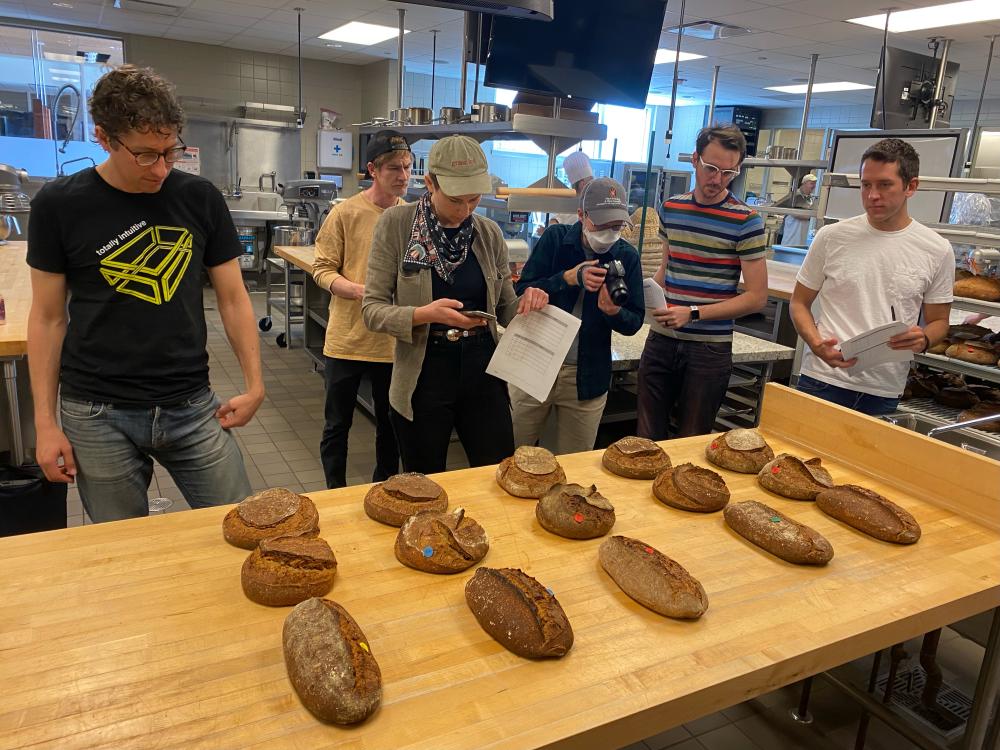
Figure 5: 2023 Chicago baking trial. Photo credit: Alyssa Hartman, Artisan Grain Collaborative.
Bickford Breaks Away
By the final round of in-person trials in 2023, there was enough grain to involve roughly 40 bakers at six gatherings in New York, Vermont, Illinois, Wisconsin, and Minnesota. More than a decade of research station, on-farm, and baking trials had narrowed the pool to three final lines, with Warthog as a check variety to confirm that the line they would release was an improvement over what was already on the market.
One of the most difficult aspects of any collaborative process, in any field, is achieving consensus. And if consensus isn’t possible, then deciding how the group will advance without it. By this point, the list of people with a stake in the outcome ran into the dozens: farmers who had grown the trial plots, researchers who had spent a decade selecting for the right traits, and a large group of bakers weighing in on the same handful of lines. With so many people involved in every step of the breeding project, it’s easy to worry that at the end of the trialing process, the researchers would be faced with a tough decision.
“We were very concerned at the last minute: what if the bakers decided on one and the farmers decided on the other?” UW-Researcher Lucia Gutierrez explained. “A farmer would not be able to sell it if there’s not a market. The bakers were very aware that if it didn’t work for the farmers, they would not be able to grow it, or it would be super expensive.” But when it came time to reveal the results of the tests, UW-Researcher Julie Dawson was able to announce that the entire group had agreed on one line. “We were all so happy,” said baker Solveig Tofte. “We felt amazing. Like, we did it.”
Bickford is a hard red winter wheat, planted in the fall, dormant through winter and harvested in midsummer. Its parentage is the French heritage variety Rouge de Bordeaux crossed with the Canadian variety Warthog, giving it a combination of the flavor complexity from a European landrace and the proven agronomic performance of a variety already loved by organic farmers in the Northeast and Midwest.
John Wepking, who spent years watching it in the field and milling it for baking trials, described its physical profile: “The head turns down and there’s a lot of open space between the kernels, almost like a spelt. That extra airflow means it gets wet but then dries out quicker because it’s not trapping moisture,” which means that it is better able to resist sprouting before harvest.
Its protein content averages around 10% in trials, similar to Warthog but lower than many other breeding lines. Protein in bread is what gives it strength, allowing it to trap gas as the bread rises. This can be good, but too much protein can also lead to a tough, or chewy, loaf. Because sourdough has a longer fermentation, artisanal bakers use a less intensive mixing process, which means the flour needs less protein than it would in an industrially milled context.
Baker Andrew Hutchison said he’s come to recognize Bickford by feel. “I was doing a wheat trial recently,” he explained, “and I’m pretty sure one of the flours was Bickford. It’s the way it absorbs water, how it develops its gluten network. Some flours are quick developers. I think Bickford is kind of a late bloomer, but it always turns out really nice.” (He was right—a fact confirmed after the codes for the trial were unblinded.)
Because most of the on-farm trials and selection were conducted in the Midwest, Bickford is known to perform best there, and it particularly stands out for stability in areas with more environmental stress or less fertility. For example, the Driftless region of Wisconsin, with its wind-swept ridgetops, appears to be a particular place the variety shines. Appropriately, the late Paul Bickford, for whom the variety was named, farmed the same landscape for more than 40 years before transitioning his well-tended land, equipment, and ethos to John and Halee Wepking. Paul passed away in a farm accident in 2022 as the variety was in the final stages of trialing. Harold Wilken offered a tribute: “It’s named after a great organic farmer who dedicated his life to better quality soil and also to feeding people healthy flour and grain.”
In the early summer of 2024, the Wepkings hosted a field day with UW-Madison and AGC at Meadowlark Farm & Mill to announce the naming of the wheat after 10 years of trialing and selection. Several of the bakers who had participated were there.
“Standing in front of that field of Bickford, ready to be harvested, with the researchers who had spent so much time developing that grain, and John and Halee—it was awesome,” said baker Melina Kelson, “the fruits of your labor, literally. There’s no paycheck that fills that void the same way a community-focused event does. To do greater good for our industry fulfills us.”
Andrew Hutchison had been struggling, at the time, with burnout serious enough that he had considered leaving the baking industry altogether. The field day changed something. “I just remember this incredibly warm feeling, seeing the farmers and everyone together, and it really ignited something in me again. I really needed that. I walked away feeling really grateful for that group and that community. For me, that’s the magic right there. The bread stuff—that’s all easy. It’s the community stuff that’s important.”
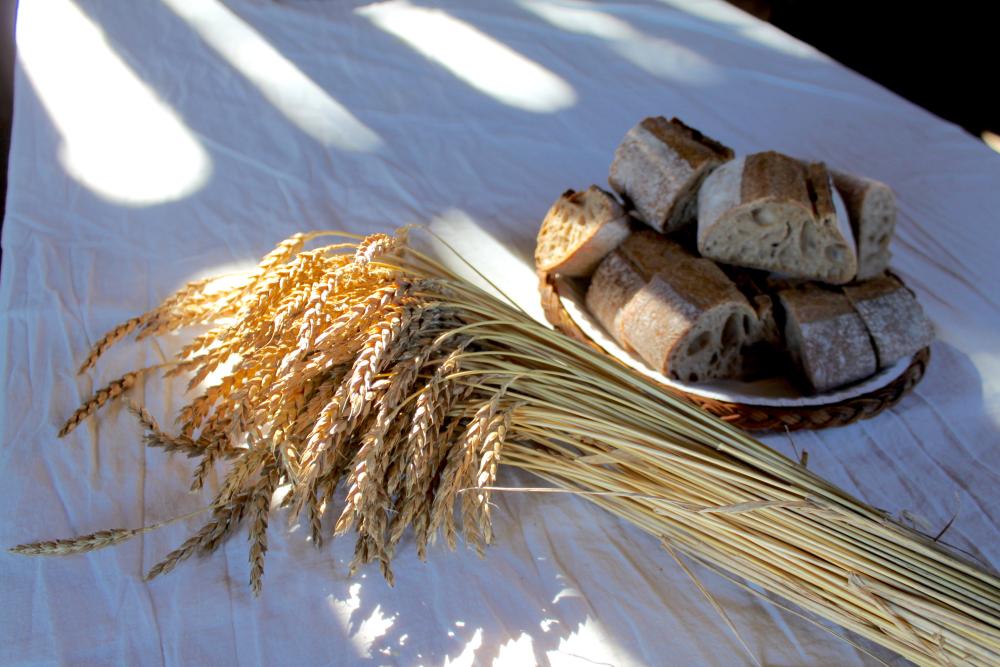
Figure 6: Bickford stalks and bread. Photo credit: E. Byrne, Artisan Grain Collaborative.
The Path to Commercial Release
Even once a breeding line has been trialed, vetted, and advanced, getting it into farmers’ hands comes with its own set of challenges. For starters, it has to be scaled up in a high enough quantity that there is seed to sell. In addition, the path to commercialization for a new seed variety winds through complex questions around intellectual property, ownership, attribution, and royalties. The path is made more complicated for Bickford because of the sheer number of people involved in its development.
The seed multiplication began at Meadowlark Farm & Mill, where the Wepkings were already growing out small quantities of Bickford as the variety was being finalized. “We started with enough to plant four acres, which was then inspected by the Wisconsin Crop Improvement Association as foundation seed,” John explained. “That four-acre increase we planted on larger acres in the fall of 2024, which then we were able to sell to Albert Lea Seed.” Albert Lea Seed is a Minnesota-based seed company with an emphasis on organic seed that had been following Bickford’s progress for years.
Commercialization plan in place, the team still had to decide how to determine ownership of the variety. Typically, when a university-funded breeding program releases a new variety, its Technology Transfer Office determines whether it makes sense to apply for intellectual property protection, which can provide the opportunity for the breeding program to recoup some of the costs of research and development through royalties. But in the case of Bickford, in part because of the collaborative nature of the project, the university turned the decision back to the group.
After discussions with the farmers and bakers involved, the team at UW-Madison decided to apply for a Plant Variety Protection certificate, a type of intellectual property that allows farmers to save some of their own seed each season without paying royalties, and that allows researchers to continue to use the variety in breeding projects, while still giving the owner exclusive marketing rights for the first 20 years. This strategy was important for Albert Lea to sign on because, although they didn’t need to be the only company to market Bickford, having an agreement in place to help regulate who sells the seed helps maintain the variety’s identity and quality while it is established in the marketplace.
The plan was ideal, except for just one important caveat: applying for a Plant Variety Protection certification required the applicants to name an owner. At first, the university, unaccustomed to projects like this, thought the application should be filled out with the names of the university plant breeders on the project, in part because the federal definition of “breeder” is typically narrowly construed. But the research team insisted that the farmers and bakers who participated in selection over multiple years were just as much a part of the breeding process as they were. Their insistence, and the resulting coordination with the university, was an extra step that nearly delayed the variety’s release past planting season. John Wepking explained: “Julie was very good to insist that all the farmers and bakers who did at least three years of evaluation on this variety are named in the application. That was part of the delay, but I’m grateful she did it.”
The team was awarded a PVP certificate in July 2026. Of the more than 18,000 varieties in the U.S. Department of Agriculture Plant Variety Protection database, theirs is the only one whose “Applicant” column ends in “et al.,” indicating that there are more names on the application than can fit in the square.
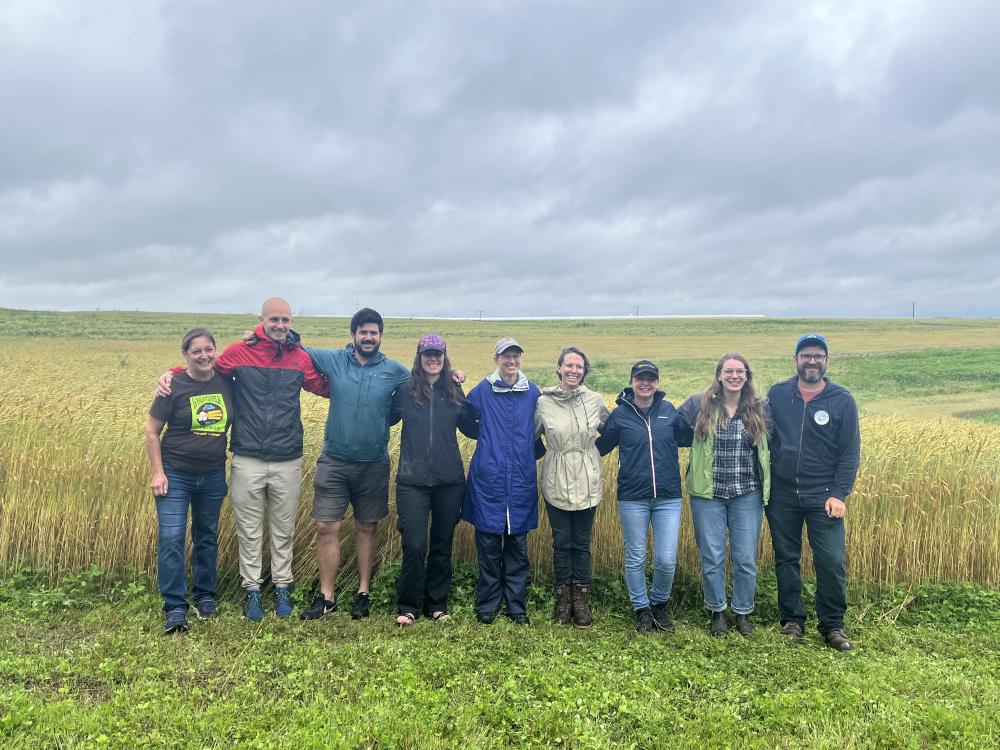
Figure 7: Bickford collaborators in Wisconsin, 2024. Photo credit: S. Elliott, Artisan Grain Collaborative.
What Comes Next
Like any new release, Bickford’s first commercial season has also revealed areas for continued attention. During the seed increase phase, bunt, a seed-borne fungal disease common in wheat and other small grains, was detected in the crop. There are no known commercial varieties with resistance to bunt, and in commercial seed production, it is controlled with fungicidal seed treatments, which are not available to organic producers. The team had hoped to maintain Bickford seed production entirely in certified organic systems; however, the emergence of bunt has challenged this strategy. For now, Bickford seed will likely require a fungicidal seed treatment in the first year of the production cycle to produce conventional foundation seed. The harvested foundation seed will then be planted, untreated in a certified organic system to produce certified seed for sale to farmers.
And everyone involved in the project recognizes that Bickford is just one outcome out of a much larger effort that will, ideally, produce more varieties even better adapted to organic production and more varied environments that continually adapt to new and different environments. While few genetic sources of resistance to bunt exist, finding them and incorporating these into breeding programs, along with other disease resistances, quality and production traits, is a top priority. Pablo Sandro Garcia, whose fieldwork across Wisconsin and Illinois over five growing seasons produced the data that led to Bickford’s release, has already been making new crosses with Bickford as a parent, combining its stability and artisanal baking quality with traits from other lines. In February 2026, AGC hosted another virtual bake test with some of those most promising crosses, which were mailed to 10 AGC member bakers across the Midwest.
Lucia Gutierrez, who has since moved to a position at the Swedish University of Agricultural Sciences and has already been approached about testing Bickford progeny in Scandinavia, offered the plant breeder’s long view: “Plant breeding is never a one-and-done deal. With disease resistances, there is always going to be a breaking of disease resistance. Bickford is not going to be there forever solving all the problems. It’s one thing that needs to happen so that we can sustain those markets and to continue breeding.”
Another goal, as Dawson described it, is to extend the participatory model back into the Northeast, using some of the original breeding pool to identify high performers in that environment, building on Bickford’s popularity among bakers there. Henry Blair and June Russell, who helped build the GrowNYC Regional Grain Project in New York, are now both at the Glynwood Center for Regional Food and Farming, a Hudson Valley-based organization that continues to conduct variety trials and baking evaluations through the Value-Added Grains project that helped start all of this work back in 2011. In a recent baker evaluation, Blair’s group asked participants what stood out before sharing any information about the varieties. “It was a resounding excitement for SARE260, which was Bickford,” he said. “That was the standout favorite. The bakers loved the texture, the structure, the volume, flavor, color, everything. And then they were very excited to hear that it was Bickford, released commercially, and that we have some in the ground, and that it’s going to be available for them to purchase.” The reception gives the team confidence that the original breeding pool still has more to offer the Northeast.
Back on Janie’s Farm, where bags of Bickford seed are waiting to be planted, Harold Wilken takes the long view, returning to the 15-year arc that led to this moment and the fundamental patience that plant breeding requires. “I’ve been excited about being a part of the process to bring new varieties online that would be good for milling and good for economic viability, too. But when it comes to breeding, you can’t rush breeding good quality grains. You’ve gotta be patient. You’ve gotta root for the plant.”
***
The Team
Researchers: Julie Dawson, University of Wisconsin–Madison (formerly Cornell University); Lisa Kissing-Kucek, USDA-ARS (PhD, Cornell University); Mark Sorrells, Cornell University; Lucia Gutierrez, Swedish University of Agricultural Sciences (formerly University of Wisconsin–Madison); Pablo Sandro Garcia, University of Wisconsin–Madison; David Benscher, formerly Cornell University; Jessica Rutkoski, University of Illinois; Phil Holman, University of Wisconsin–Madison; Allison Krill-Brown, University of California, Davis (formerly University of Illinois); Marissa Nix, University of Wisconsin–Madison; Brian Jacobson, University of Illinois Pilot Processing Plant
Farmers: Paul Bickford, Bickford Organics; John and Halee Wepking; Meadowlark Farm & Mill; Harold Wilken, Janie’s Farm Organics & Janie’s Mill; Thor Oechsner, Oechsner Farms & Farmer Ground Flour.
Host Bakers: Sharon Burns-Leader, Bread Alone Bakery; Randy George, Red Hen Baking; Jeffrey Hamelman, formerly King Arthur Baking Company; Andrew Hutchison, Madison Sourdough; Melina Kelson, Culinary Institute of America, formerly Bootleg Batard; Stefan Senders, Wide Awake Bakery; Kirk Smock, ORIGIN Breads; Solveig Tofte, formerly Sun Street Breads
Participating Bakers: Nora Allen, Mel the Bakery; Benjamin Anderson, Barrett's Bagels; Grayling Bauer, Sparrowbush Bakery; Stephen Blanchard, Stephen’s Breads; Arlo Brandle, River Street Bakery; Cornelius Bouknight, Pizza Finestra (formerly Publican Quality Bread, middle brow); Carrie Brisson, King Arthur Baking Company; Ben Brown, B-Cubed Bakery; Christine Burke, Stephen’s Breads; Mo Cheeks, Bread & Justice; Nancy Carey, College of DuPage; Jen Cheski, Worth Her Salt Sourdough; Young Cho, Simple Food Group; Anne D'Argent-Wallace, formerly D'Argent Bakery; Sam DeGennaro, King Arthur Baking Company; Loic Dewavrin, Le Moulin des Cedres; Tyler Diethart, Baker’s Field Flour & Bread (formerly Sun Street Breads); Ambrose Erkenswick, Verzenay Patisserie; Hannah Fink, Tooth Butter Cottage Bakery; Karen Firth-Linton, Hawthorne Valley; Jeff Ford, Cress Spring Bakery; Hannah Francis, UW-Madison; Wesley Gardner, Meadowlark Community Mill; Doug Freilich, NAGA Bakehouse; Jennifer Haglund, Bird Dog Baking; Austin Hall, She-Wolf Bakery; Jon Houseman, formerly Sun Street Breads; Michele Huggins, DoughP Creations; Philip Jahnke Sauer, formerly Oneota Coop; Shelby Kibler, Field & Fire; Matt Kronschnabel, formerly Bard Bread; Jaymie Levine, Jaymie Bakes; Don Lewis, Wild Hive Farm; Christopher MacLeod, Laune Bread; Blair Marvin, Elmore Mountain Bread; Nate McCallister Higgins, Madison Sourdough; David McInnis, Wide Awake Bakery; Mark Pavlovich, Bloom Bake Shop; Hope Rainbow, Wide Awake Bakery; Vickie Renick, Randolph Street Farm; Michael Riggs, Bayview Bread; Roshani Samdurkar, M.A.D. Bakery; Allen Schade, Powell Artisan Bakery; Eric Schedler, Muddy Fork Farm & Bakery; Bobby Schaffer, Lost Larson; Patrick Shaw-Kitch, Brooklyn Granary & Mill; Rebekah Stamps, Edgewood Bakeshop; Julie Sperling, NAGA Bakehouse; Jacob Suiter, Publican Quality Breads; Rebecca Sutter, Rebecca’s Confections; Hazim Tugun, Zingerman’s Bakehouse; Gregory Tyzzer, Dorothy Lane Market; Kylie Vanerstrom, Farm Club; Marissa Venturi, formerly of Middle Brow; Kim Viejo, She Wolf Bakery; Sarah Vitale, She Wolf Bakery; Greg Wade, Publican Quality Bread; Patrick Wylie, Baker’s Field Flour & Bread; Andrea Kapsales, consultant.
Coordinating Organizations: June Russell and Henry Blair, Glynwood Center for Regional Food and Farming (formerly GrowNYC Regional Grains Project) (New York, NY); Alyssa Hartman, Artisan Grain Collaborative; Robert Perry, NOFA-NY, Elizabeth Dyck, Organic Growers’ Research and Information-Sharing Network (OGRIN); Sensory training facilitated by Liz Clark, Gimme Coffee (Ithaca, NY) and Roy Desrochers, Sensory Practice Leader (University of Vermont Extension).
Funding
This work was supported by:
- USDA NIFA Agriculture and Food Research Initiative: project award numbers: 2009-65300-05661; 2011-68002-30029.
- USDA NIFA Organic Research and Extension Initiative: project award numbers: 2011–51300-30697; 2020-02136; 2023-51300-40916.
- USDA-SARE: Grant Numbers: LNE12-318 and GNE15- 107.
- Hatch projects: 149-430, 149-449, 149-945.
- WARF/WCIA/CALS: MSN234477, MSN244376, and MSN256676.
- UW-Madison Center for Integrated Agricultural Systems and the College of Agricultural and Life Sciences (CIAS).
Any opinions, findings, conclusions, or recommendations expressed in this publication are those of the author(s) and should not be construed to represent any official USDA or U.S. Government determination or policy.